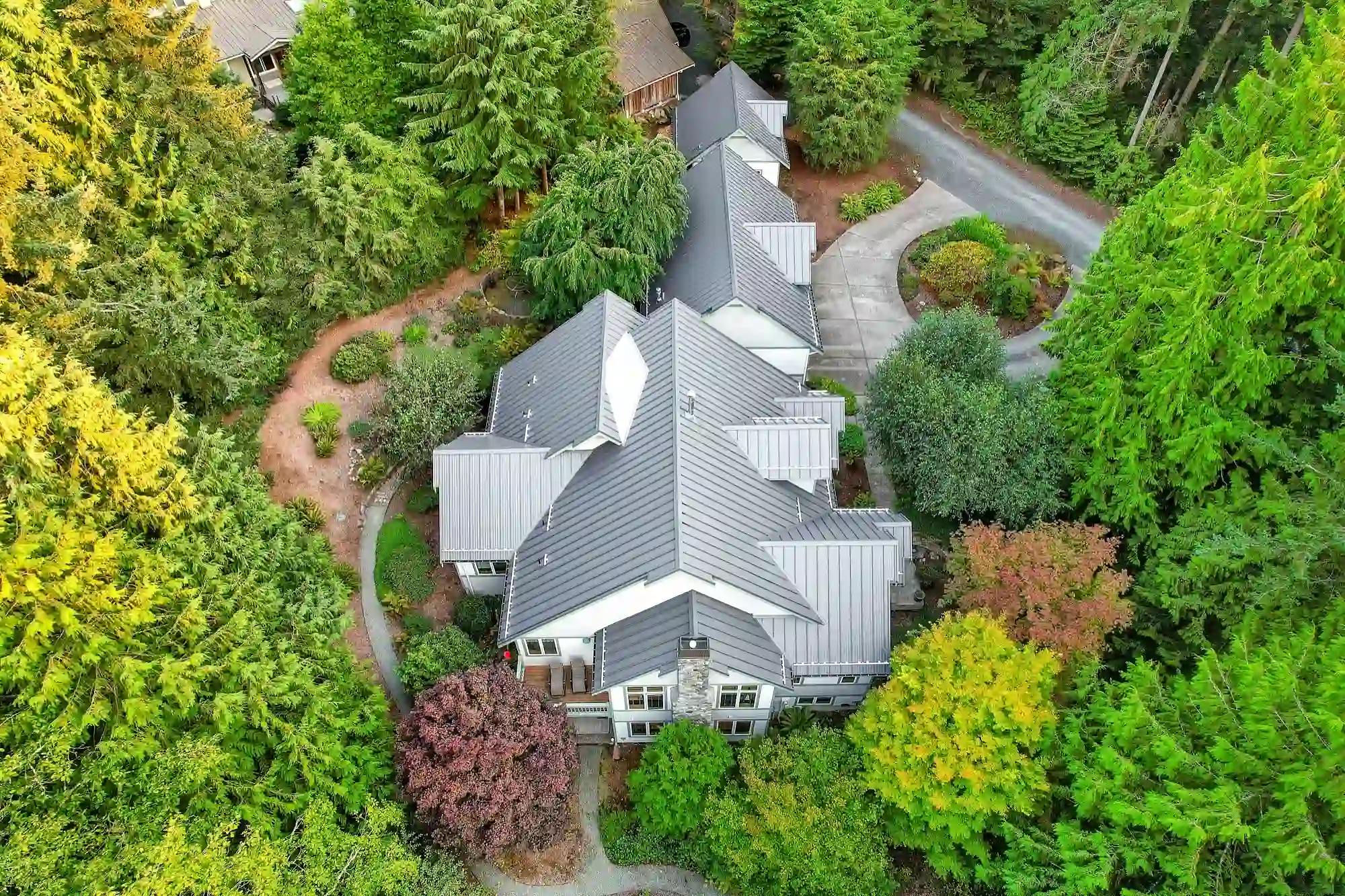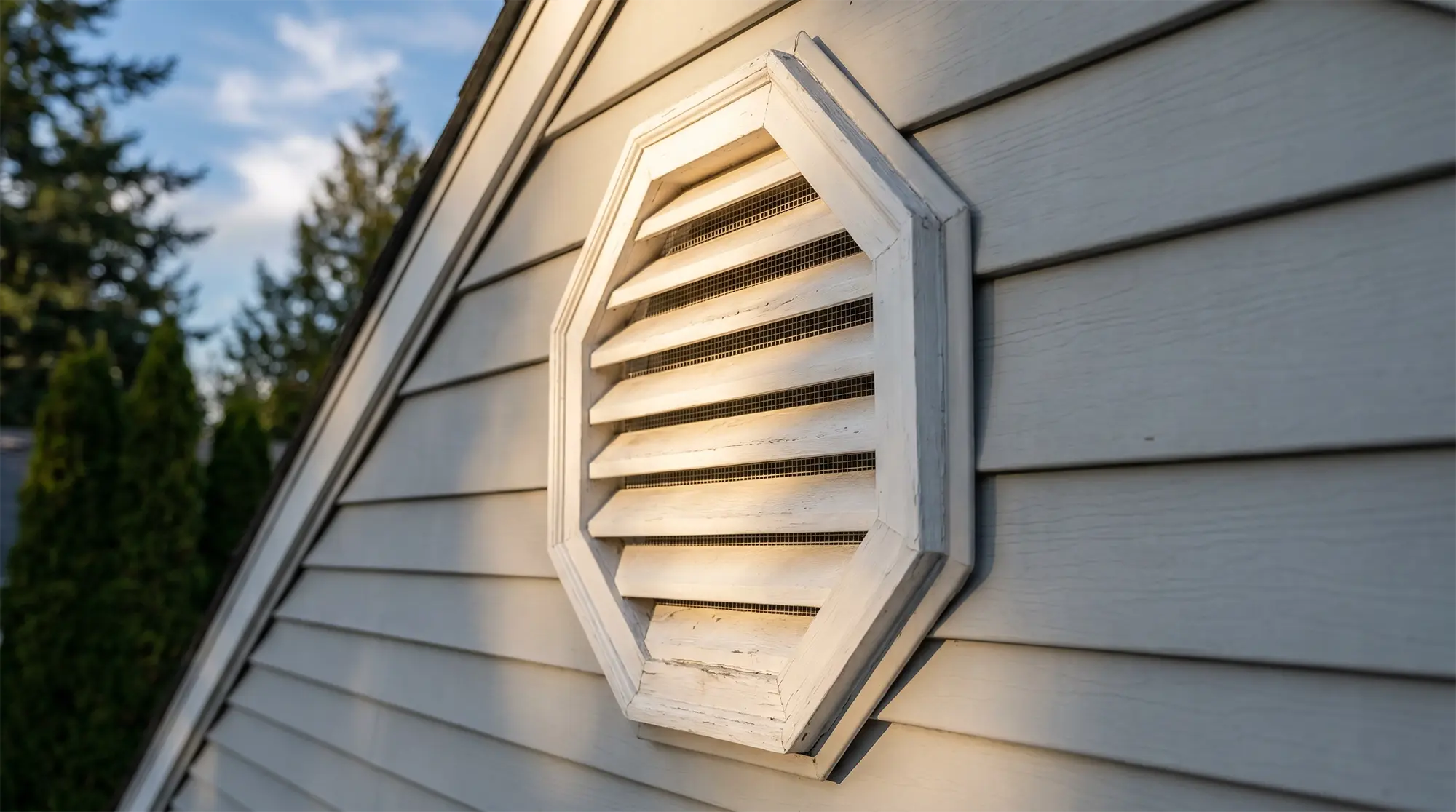
Drive through any neighborhood in Bellingham, Mount Vernon, or Anacortes and you'll spot them: little triangle, half-moon, or rectangular openings tucked into the peaks of homes. Gable vents are a familiar feature on houses across Northwest Washington, but they aren't always doing what homeowners think they're doing.
Depending on how the rest of your roof is ventilated, roof gable vents can either help your attic stay healthy or actively work against it. At Mt Baker Roofing, here's how we think about whether to keep your gable vents open, supplement them, or close them off entirely.
What Are Gable Vents and How Do They Work?
A gable vent is an opening installed in the triangular wall section under the peak of a sloped roof, the "gable end." Behind the vent is a screened opening into your attic.
The original idea is simple cross-ventilation: when wind hits one side of the house, air pushes in through that gable vent and pushes warm or humid attic air out the gable vent on the opposite side. On older homes, especially those built before ridge and soffit vents became the standard, gable end vents were often the entire attic ventilation system.
Gable end vents perform best in pairs facing the prevailing wind, with no competing intake or exhaust elsewhere in the attic.
When Gable Vents Help Your Roof Ventilation
Gable vents aren't outdated by default. There are situations where they're genuinely the right choice:
- The home doesn't have soffit or ridge vents. On older homes with no roof overhang, blocked rafter bays, or no ridge vent path, gable vents may be the only practical way to ventilate the attic.
- Soffit vents can't be added. Some architectural styles or framing situations don't allow continuous soffit intake. In those cases, working gable vents are valuable.
- The attic shows good airflow already. If your attic stays dry, frost-free in winter, and reasonably cool in summer, the system you have is working.
In these cases, the answer isn't to close gable vents, it's to make sure they're properly screened, weather-protected, and sized correctly for the attic.
When Gable Vents Should Be Closed
Closing off gable vents makes sense when:
- You're installing a ridge-and-soffit ventilation system (more on that in the next section).
- Wind-driven rain or snow is regularly entering through the louvers.
- Pests, bats, or birds are getting past the screening.
- You're in or near a wildfire-prone area and the vents aren't fire-rated.
- The attic shows signs of moisture problems, frost on the underside of the decking, dark staining, or musty smells, that suggest your current ventilation is unbalanced.
Closing gable vents is usually a straightforward part of a roof replacement or a targeted roof repair project, and it's something we evaluate on every estimate.
Gable Vents and Ridge Vent Conflicts
Modern attic ventilation is built around a simple physical principle: cool air enters low through continuous soffit vents, warms as it rises, and exits high through a ridge vent. That convection flow keeps moisture moving and pulls heat out of the attic on its own.
Adding gable vents into that system can short-circuit it. Air follows the path of least resistance, and that path is usually in through the closest gable vent and straight out the ridge vent without ever reaching the soffits. The result:
- The soffit intake is wasted.
- A large portion of the attic stops getting active airflow.
- Pressure imbalances can actually pull moist air into the attic instead of out of it.
Many shingle manufacturers recommend closing gable vents when a ridge vent is installed, and some require it as a condition of the warranty. If you're planning a new roof, this is one of the first things our team will look at.
How Mt. Baker Roofing Evaluates Your Gable Vents
There's no one-size answer to gable vents, the right call depends on your roof shape, your existing ventilation system, your attic conditions, and your exposure to weather and fire risk. When our team inspects your home, we look at:
- The full ventilation picture: soffit, ridge, gable, and any powered vents working together
- Attic signs of trouble, frost, mold, rust on nails, hot spots, or unusual heat in upper floors
- Whether intake and exhaust are actually balanced for the attic's volume
- The roofline shape and the home's exposure to wind and embers
From there, we'll recommend whether to keep, close, supplement, or upgrade your gable vents, and how to integrate that into a long-lasting roofing system.
We've installed and inspected roofs on more than 20,000 homes across Whatcom County, Skagit County, Snohomish County, and Island County, and we know how Pacific Northwest homes really breathe.
Wondering whether your gable vents are helping or hurting? Contact Mt Baker Roofing today for a free estimate, and we'll take a careful look at the whole ventilation picture before we recommend a single change.